How a Fictional Casino Scene Guides the Audience’s Attention
A fictional casino scene in Trà Vinh can keep readers oriented by using sound, public language, and place details to clarify who knows what and why.
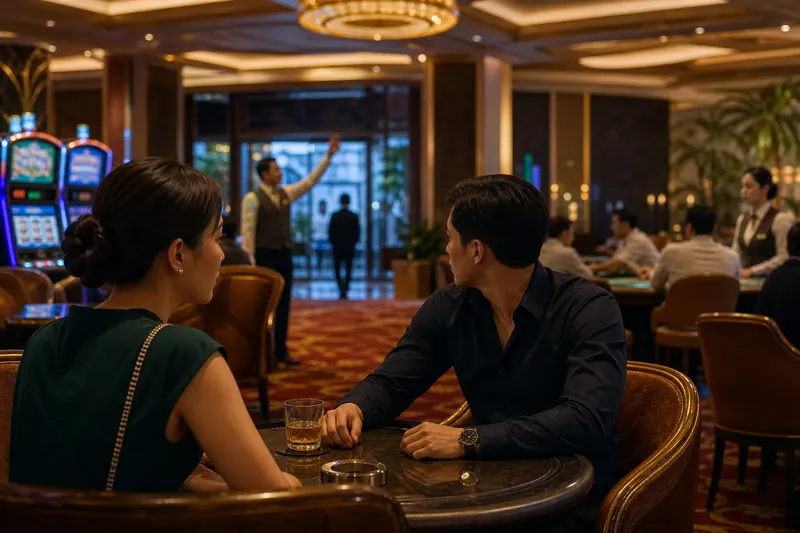
How can a fictional casino scene in Trà Vinh feel specific without turning the venue into a shorthand for the whole city? Give the room a clear point of view: show what one character can hear, see, and understand, then let those limits shape how the scene unfolds.
Use the room to control what readers know
A casino setting can shape a story through sightlines, interrupted conversations, and competing sources of information. Decide what the viewpoint character can notice from their seat. A doorway may remain in view while a nearby machine blocks a companion’s face; that arrangement tells readers why one gesture is visible and another is not.
Think of the scene as an information map rather than a description of the whole venue. Place a few details where they affect attention: a name called from across the room, a person waiting near the entrance, or a table that makes two characters speak face to face. If a detail changes nothing the viewpoint character can know, it may not belong.
Keep Trà Vinh specific without treating it as a symbol
Connect the setting to a character’s particular reason for being there. That might be a route they know, a companion they have arranged to meet, or a memory attached to a place they mention. These are fictional choices, not claims about what residents of Trà Vinh generally do.
Local language works best when its meaning becomes clear through the exchange. A character can respond to an expression, ask what it means, or recognize its tone from their relationship with the speaker. Avoid inserting unfamiliar words merely to signal local flavor, and do not imply that one character’s speech represents everyone in the province.
Let public language reveal who is listening
In a shared room, a sentence can have an intended listener and an accidental audience. A character might soften a question when a stranger draws near, switch to a neutral topic, or wait until a companion has moved out of earshot. Those choices reveal the speaker’s immediate concern without turning discretion into a general cultural trait.
Make the audience visible. If a character lowers their voice, show who is close enough to hear. If they choose an indirect phrase, let the other person react to it. A pause is useful when someone notices it or changes course because of it; otherwise, the scene may be clearer without the pause.
Choose sounds that alter the information flow
A sound can cover a name, interrupt a sentence, or draw a character’s attention away from a gesture. Follow the sound with its consequence. If someone misses an instruction, show a request to repeat it or a response based on partial information. If no one changes what they know or do, the sound may be decorative.
Keep the room’s noise selective. One distinct announcement can orient a reader more effectively than a list of bells, voices, and machines. The useful question is not how much noise the venue makes, but which sound matters to the viewpoint character at that moment.
Build the scene from observable details
Before adding description, decide what the reader needs to track: the characters’ positions, who can overhear, or what information has been lost. Then check each detail against that need.
- Observe the viewpoint character’s position: If the character can see the entrance and the other speaker, keep those sightlines clear; if a chair or partition blocks one view, describe the obstruction or move the character.
- Observe who can hear the conversation: If a nearby person could hear a private remark, show the speaker lowering their voice or changing the subject; if nobody is close enough, remove an unexplained whisper.
- Observe what a sound interrupts: If it covers a meaningful word, show the listener asking for repetition or acting on incomplete information; if it interrupts nothing, cut the sound or give it a clear orienting purpose.
- Observe the job of a local reference: If it explains a character’s route, memory, or meeting plan, retain it; if it only announces the setting, replace it with a detail that affects what the character notices or omit it.
- Observe the function of a pause: If another character responds or changes the subject, keep the pause and show that response; if no action follows, shorten or remove it.
- Observe the background person’s visibility: If their presence changes what the main characters say, make their location and likely attention clear; if it does not, leave them as unobtrusive background.
- Observe each unfamiliar expression: If the reply makes its meaning or tone understandable, keep it; if readers cannot infer its function, add a brief contextual response or use clearer wording.
How can a casino scene stay clear without overexplaining?
How much of the game should readers need to know?
Explain only the terms that affect what a character can see or hear. If a rule does not change the information available in the scene, leave it out.
How can a sound carry plot information?
Connect it to a specific interruption, missed word, or shift in attention. Then show the consequence so readers understand why the sound matters.
How can Trà Vinh appear without becoming a generalization?
Use a detail tied to one character’s route, memory, or reason for meeting someone. Keep it particular to that person rather than presenting it as a fact about the whole community.
What room details are not worth describing?
A full inventory of games, furnishings, and background noise is not worth the effort if it does not orient the reader or change what a character knows. Keep the details that establish position, attention, or an overheard exchange.
Work through one fictional exchange
Say Mai, an invented character from Trà Vinh, meets her cousin An in a lounge to ask why he missed a family gathering. Mai starts with one question she wants answered: whether An chose not to come. A staff member calls a name near the entrance, and An turns away before replying. Mai asks him to repeat himself; he says he had planned to attend but was called into work. Because an invented colleague is standing nearby, An stops before explaining the rest. Mai sees the colleague glance toward them, then suggests they continue in the lobby. The observable result is that readers hear An’s first explanation, understand why the next detail is withheld, and know where the conversation can continue. The room shapes the exchange through attention and audience, not through a broad claim about local life.
For a fictional casino scene in Trà Vinh, attention to sightlines, overheard speech, and selective sound can make the setting legible without turning it into a local stereotype. Keep each detail that helps readers understand who notices what, and let the rest of the room remain outside the frame.