How Film Turns a Casino Setting Into a Screen Image
Casino imagery in film uses framing, props, and light to guide attention; learn how to read those choices without mistaking screen design for documentary evidence.

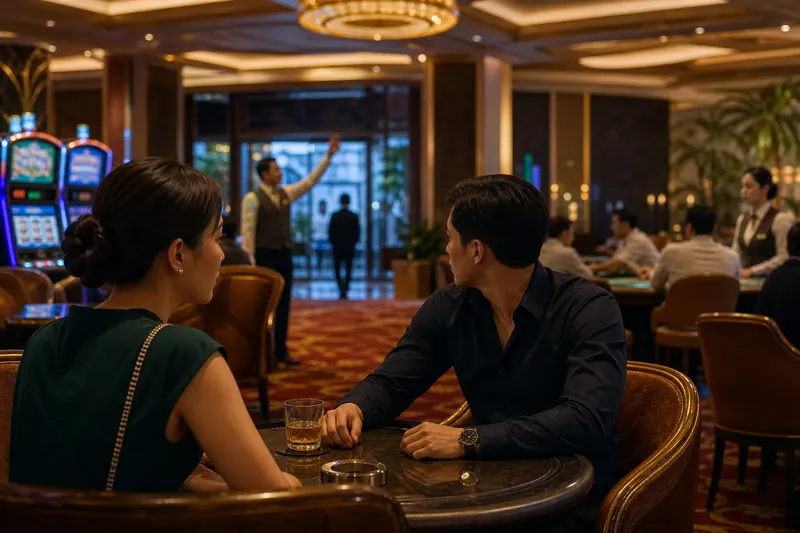
What does casino imagery in film ask you to notice first? A close-up of a card, a lit doorway, or a character held apart from a crowd can shape the scene before anyone speaks. Reading those choices carefully means describing how the image works, rather than treating a cinematic set as a record of casino culture in Trà Vinh.
Start with what the frame actually shows
Describe visible details before interpreting them: the room’s shape, where people stand or sit, which objects are present, and what occupies the center of the frame. “A player holds a card near the edge of a crowded table” is an observation. “The player is hiding a plan” is an interpretation that needs support from the scene.
Composition guides the eye. A character framed alone against a busy background may appear isolated; a repeated cut to a chip can make it feel important to the plot. First name the visual choice, then explain the effect it may have on a viewer.
- If a wide shot shows the room, note where the camera places the characters; if the edges remain out of view, treat the image as a partial view rather than a complete layout.
- If a character looks small beside an elaborate set, describe the difference in scale; if the contrast dominates the frame, consider whether it suggests isolation or spectacle.
- If one face stands out against a crowded background, identify what draws attention to it; if the scene then shifts to that person’s action, connect the emphasis to the plot.
- If the camera returns to a particular object, name it and note its place in the sequence; if the surrounding action supports it, read it as a story cue, otherwise leave its meaning open.
- If a reflection divides a face, describe the visible effect; if you interpret it as uncertainty, present that as a possible reading rather than a fact.
- If colors appear especially vivid, name the hues and where they appear; if they shape the scene’s mood, discuss the film’s visual tone rather than inferring how a real venue looks.
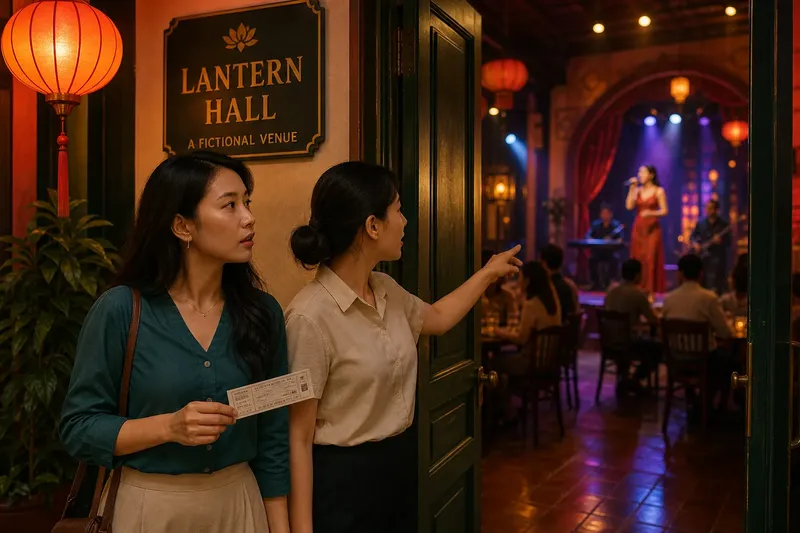
Trying to identify a real venue from a familiar sign or table design is not worth the effort. Films can combine invented details, and editing can make separate spaces appear to belong to one room.
Follow the camera’s choices through the scene
A wide shot can establish visual scale; a close-up can draw attention to a face or object. A reaction shot shows how one character responds to an event. Together, these choices control what viewers see and when, but they do not explain how a real game or venue operates.
Notice what stays outside the frame, too. A tight shot may hide the crowd, other tables, or the room’s edges. That restriction can make an exchange feel private or urgent even when the story places it in public.
Say you are watching an invented scene that begins with a newcomer at a card table. The opening shot shows the room; the next isolates one untouched chip beside the newcomer’s hand; the final shot shows the newcomer looking toward another player. The sequence moves attention from the setting to a possible choice, so hesitation is a plausible interpretation. It does not establish the rules of the game or the character’s finances.
Read cards and chips in relation to the plot
Cards, chips, and roulette wheels are familiar props, but none has a fixed meaning. A card may focus attention on strategy, a chip may point toward a stake, and a wheel may make chance visible. The action around each object determines which interpretation fits.
Keep description separate from inference. “A blue chip lies beside the player’s hand” reports what appears on screen. “The player is about to lose” predicts an outcome and needs support from dialogue, editing, or later events.
Other objects can shape a scene without carrying a gambling-related meaning. A jacket may contribute to a character’s presentation; a glass may give a pause a focal point. Ask why the camera draws attention to an object at that moment instead of assigning it a symbol automatically.
Explain how light and color set a visual tone
Lighting can make a scene feel theatrical, intimate, or uneasy. Bright light can make a face easy to read, while shadow may conceal an expression. A reflection can split a figure across the composition and invite an interpretation of uncertainty.
Color also contributes to a film’s visual tone. A scene might emphasize warm golds, saturated reds, or muted blues through set decoration, lighting, and color grading. Describe those decisions as image-making, not as evidence about the appearance or atmosphere of a real venue.
“Warm light pools over the table” describes a visible effect. “The room promises wealth” interprets it. Keeping those statements distinct makes the reasoning easier to follow.
Ask what casino imagery in film lets a scene do
A casino setting can give a story a stage for negotiation, reunion, disguise, or public self-presentation. It may bring characters into view of one another or make a private intention harder to conceal. Those are readings of a scene’s construction, not descriptions of local customs.
Ask what changes because the exchange happens there. Does the setting bring two characters together? Does a game give them a reason to interact? Could the same conversation happen elsewhere without changing the story? The answers help explain the scene’s dramatic function.
Which questions help you read casino imagery in film?
Why do filmmakers use casino settings?
A casino setting can bring chance, money, and social performance into one scene. A filmmaker may use that combination to frame a decision or encounter, without presenting the setting as a documentary account of a real place.
Does a screen casino accurately show a real casino?
A film may use recognizable props, but its layout, lighting, crowd, and timing are arranged for the story. Treat the scene as a crafted image unless reliable, place-specific information supports a factual claim.
What can a close-up of a card or chip suggest?
A close-up signals that an object matters at that moment. It may suggest risk, status, concealment, or concentration; the surrounding action helps establish which reading is plausible.
How can you describe a scene without overclaiming?
Name what is visible, explain how framing or design emphasizes it, and mark interpretation with phrases such as “suggests” or “may imply.” Keep observations about the film distinct from claims about actual places and people.
Keep interpretations attached to the images
Repeated screen images can feel like a complete picture: a dramatic room, carefully placed props, and characters arranged for tension. Yet a scene selects what serves its story and leaves other details outside the frame. Its strongest evidence concerns how the film directs a viewer’s attention.
That boundary matters when discussing casino culture in Trà Vinh. A film’s palette, set, and imagined characters can support an interpretation of the film, but they cannot stand in for local language, entertainment, or lived experience. Keep claims about the image tied to what the image shows, and seek place-specific sources for claims about life beyond the screen.
When writing about casino imagery in film, quote or describe the precise visual detail that supports your reading. That small discipline makes the interpretation clearer and prevents a dramatic image from carrying claims it was never made to support.