How Casino Language Shapes Stories Set in Trà Vinh
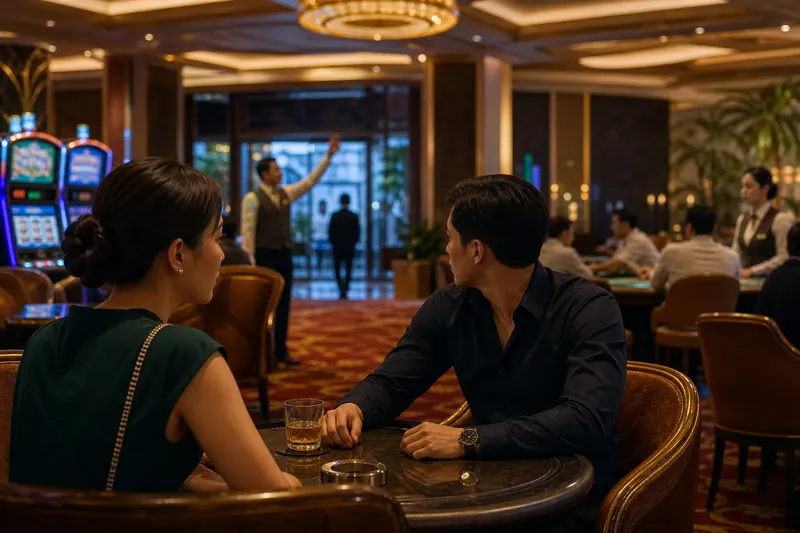
Casino language in Trà Vinh fiction can clarify a character’s aims, distinguish gambling from entertainment, and keep invented dialogue from sounding like local testimony.
How can casino language in a story set in Trà Vinh sound clear without turning invented dialogue into a claim about local speech? Casino language in Trà Vinh fiction works best when each term does a specific job: naming an activity, showing a character’s priorities, or helping readers follow a change in the scene.
Give each casino term a distinct job
“Casino” identifies gambling as central to the place or activity. “Gaming room” points to a particular space, while “show” directs attention to a performance. “Night out” is broader: it describes an outing without specifying its purpose.
These choices can shape a character without pretending to document community vocabulary. A character who asks about a game may say “casino”; someone looking for a singer may ask where the stage is. The distinction comes from what each person wants in that moment, not from a claim that either expression is customary in Trà Vinh.
For Vietnamese wording, avoid assigning a narrow casino meaning to a broad expression without checking it. “Khu vui chơi” can refer broadly to a recreational or entertainment area, but its precise sense depends on context. If the exact nuance matters to the story, consult a qualified Vietnamese language reviewer familiar with the intended audience. Otherwise, use a clear description of the activity or place and let the scene make its meaning apparent.
Build the scene around what characters do
Let the action determine the noun. If a character is gambling, identify gambling or the casino. If the scene follows a performance, name the show, singer, or stage. If the characters are eating or talking, describe that activity rather than using a venue label that could point readers toward gambling.
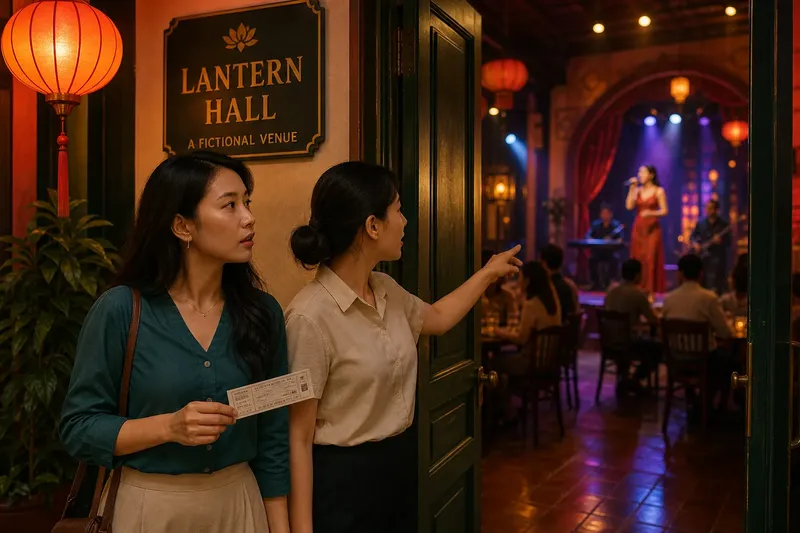
Small physical details can orient the reader when they matter to the action: a character holding a ticket, music carrying from a corridor, or someone asking for directions to a dining room. A catalog of décor is not worth the effort if it does not help readers understand a decision, movement, or exchange.
Keep Vietnamese wording precise without overclaiming
A phrase may shift in meaning with the speaker and situation. Rather than treating one English gloss as universal, decide what the character intends to communicate in that particular line. If readers might misunderstand, clarify the intended activity in nearby narration or dialogue.
For instance, a character might say “khu vui chơi” while speaking generally about an entertainment area. Another character could ask which part they mean, and the speaker could answer “the performance space.” That reply narrows the meaning for this exchange; it does not establish a fixed translation or a local usage pattern.
How should casino terms work in a Trà Vinh story?
When should a character say “casino”?
Use “casino” when the character means a gambling venue or gambling is central to the conversation. If the character is asking about dinner, lodging, or a performance, name that activity instead.
Can “khu vui chơi” be translated as “casino”?
Do not assume that it can: the expression is broad, and context affects its meaning. For a precise translation, ask a qualified Vietnamese language reviewer; for a scene-level meaning, clarify what the speaker means in the exchange.
How can a character’s attitude appear in casino dialogue?
Show what the character notices, asks, or avoids. Someone concerned about gambling might ask whether a game is taking place, while a guest focused on music might ask where the singer is performing.
Should a story use local slang for authenticity?
Use slang only when a qualified, audience-aware reviewer can confirm that it suits the speaker and context. If that review is unavailable, clear standard wording is safer than labeling an unverified expression as local.
Check the wording against the scene
- If gambling is the main action, use “casino” or a precise gambling term; if it is not, name the activity the scene actually follows.
- If a performance is happening, identify the show, singer, or stage; if none appears, avoid using “show” as a vague venue name.
- If lodging is part of the fictional setting, “hotel” may fit; if lodging is absent, do not call the place a resort without supporting details.
- If a phrase sounds promotional, make clear which character or advertisement uses it; if nobody in the scene owns that wording, replace it with a neutral description.
- If a Vietnamese expression has more than one plausible sense, clarify the intended meaning or seek language review; if neither is possible, choose a clearer phrase.
- If a real location is named, check whether invented details could be mistaken for facts about it; if the boundary is unclear, make the setting explicitly fictional or remove the reference.
Say you are writing an invented scene in which Mai enters a fictional venue called Lantern Hall. The scene begins with Mai holding one ticket for a singer and hearing music from a doorway; the narration establishes that Lantern Hall is invented. She first asks, “Is the casino open?” because she is trying to learn whether gambling is part of the venue. After a companion points toward the music, Mai asks, “Where is the performance space?” The observable result is that readers can distinguish her question about gambling from her interest in the singer, without mistaking the exchange for evidence about an actual Trà Vinh venue or local vocabulary.
Choose plain wording when the action is simple
Searching for a clever substitute every time gambling comes up is not worth the effort. Ornate labels can sound like advertising and distract from what a character sees or decides. A direct term, followed by a concrete action, is often easier to read.
For casino language in Trà Vinh fiction, separate the character’s intended meaning from what readers may infer. Give each term a clear purpose, and seek qualified language advice when a Vietnamese nuance matters. That keeps the scene specific while leaving claims about real local speech where they belong: with evidence and informed review.